Natural stone cleaning and sealing in Paradise Valley
$1.275/sqft cleaned after 15% off. pH-neutral products only. Travertine, marble, limestone and slate, with the stone identified before anything touches it.
Calls answered 7am to 8pm · same-day service usually available
Measure the stone areas first. That figure times the rate is your price.
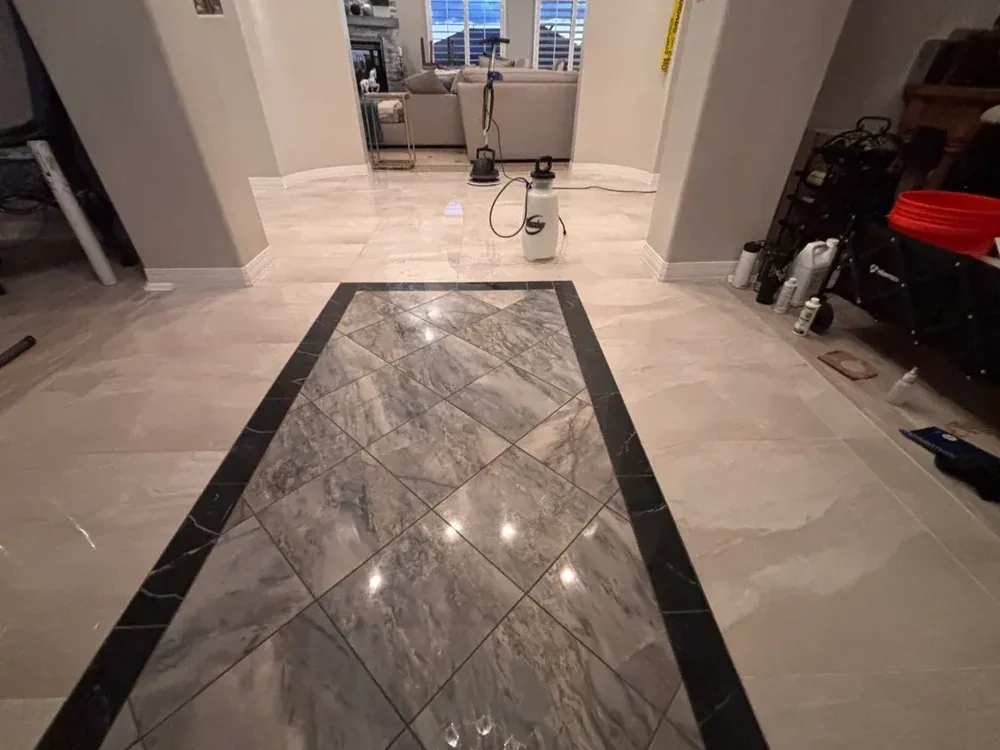
What it costs
| Interior stone | Rate | After 15% off |
|---|---|---|
| Cleaning only | $1.50/sqft | $1.275/sqft |
| Clean + clear sealer | $2.00/sqft | $1.70/sqft |
| Clean + color enhancing sealer | $2.50/sqft | $2.125/sqft |
| Clean + grout color seal | $2.75/sqft | $2.3375/sqft |
| Clean + clear seal + grout color seal | $3.25/sqft | $2.7625/sqft |
| Clean + color enhancing + grout color seal | $3.75/sqft | $3.1875/sqft |
| Pool deck and cool deck | Rate | After 15% off |
|---|---|---|
| Cleaning only | $2.00/sqft | $1.70/sqft |
| Clean + clear sealer | $3.00/sqft | $2.55/sqft |
| Clean + color enhancing sealer | $4.00/sqft | $3.40/sqft |
Grout repair from $150, quoted once we have seen it and not discounted. Stone showers and wet areas are quoted in person. Send a photo by text for a rough range first.
$150 minimum per visit. Same rates as every other town we work in, because the work is the same work.
Full pricing, every tier, with worked examples.
Calculate it yourself
Measure each stone area, length by width, and total them. That figure against the rate is your price, and it takes about a minute.
An 800 sqft stone floor is $1,020 cleaned at the discounted rate, or $1,360 cleaned and clear sealed. A 1,600 sqft main level is $2,040 cleaned, $2,720 sealed.
Accuracy to the inch is not the point. Knowing the order of magnitude before you speak to anybody is, and it makes every other quote you get checkable.
The chemistry, which is the whole reason this is a separate trade
Travertine, marble and limestone are calcium carbonate. Acid dissolves calcium carbonate. Everything else follows from that one fact.
It means an acidic product does not clean these stones badly, it removes part of the surface, leaving a dull patch where the finish used to be. It happens on contact rather than over time, and there is no route back that does not involve a refinisher and diamond pads.
It also means most of what sits under a kitchen sink is dangerous here. Anything sold for hard water, soap scum or general bathroom use is very likely acidic, and vinegar, which gets recommended constantly, is among the worst.
Everything we put on stone is pH-neutral. There is no circumstance in which that changes.
Worth asking any other company the same question, and treating a vague answer as an answer.
Why the houses here need this more
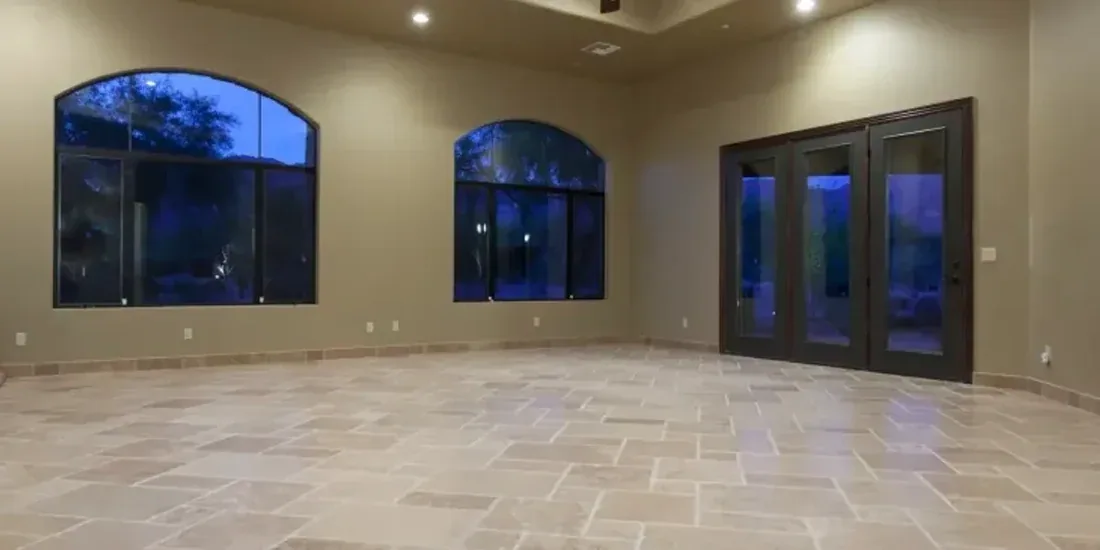
Not because the stone is more expensive, though it frequently is. Because of how these houses are built and used.
There is simply more of it
Stone runs through entries, great rooms, hallways and kitchens, then continues outside onto terraces. A single continuous surface of two or three thousand square feet is ordinary here, and all of it porous.
Indoor and outdoor are the same floor
Which means one material living two lives. The interior stretch deals with traffic. The exterior stretch deals with sun, wet and dry cycling and monsoon debris. They need different sealers and we price them separately rather than treating the run as one job.
The cleaning is frequently done by somebody else
Housekeepers, services and staff, none of whom were necessarily told what the floor is made of. Most of the etching we find was caused by a cleaning product, not a spill, and it is the single most preventable damage in this trade.
Signs it needs doing
- Stone that looks dull or flat even right after mopping
- Hard water spots or mineral buildup, particularly near doors and sinks
- Stains that will not lift with ordinary cleaning
- Grout lines between the stone reading dark
- Water no longer beading on the surface
- Traffic areas that look different from the stone beside them
How we do it
The honest limits
Stone is the one surface where the damage is permanent and expensive, so this belongs near the top rather than in a footnote.
Cleaning and sealing addresses soil, mineral and protection. Cleaning pulls out what has worked into a porous surface, and sealing keeps the next lot from going in. On stone that has never been properly cleaned the difference is substantial.
It does not address etching or worn finish. Etching is where acid has dissolved part of the surface. Worn finish is where traffic has abraded it. Both are changes to the stone itself rather than something sitting on it, so neither cleans off and neither is hidden by sealer.
Putting those right means honing and polishing with diamond pads, which is refinishing. We do not offer it, and when that is what a floor needs we will tell you rather than take the job and leave you disappointed.
- Identify the stone and assess the existing sealer. Travertine, marble, limestone and slate each behave differently, and what suits one can harm another. We also establish whether a sealer is present and what state it is in, because that changes the approach entirely.
- Clean with products matched to that stone. pH-neutral throughout, lifting soil and mineral out of the stone and the grout without touching the surface itself.
- Seal, if you have chosen it. Clear to protect what is there, color enhancing to bring the natural color forward, and grout color seal on the lines if you want it.
- Walk the finished floor with you before anything leaves, and explain the cure time for the product used.
Cleaning always precedes sealing. Sealing over soil locks it beneath the coating instead of protecting anything, which is why these are sold as tiers rather than sealing offered alone.
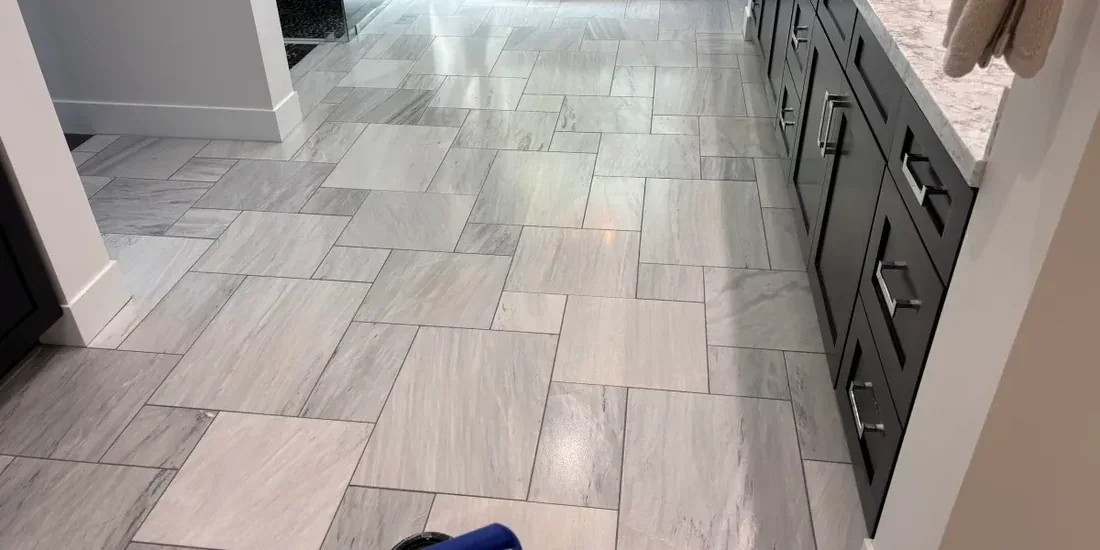
The sealing options
Clear sealer
Protects without changing how the stone looks. The right answer when you like the current appearance and want to keep it.
Color enhancing sealer
Deepens and richens the natural color rather than adding color to it. Best on travertine and slate that have gone flat, and a real visual change rather than a subtle one. We test a section first so you can compare.
Grout color seal
Adds to any tier, over 40 colors, restoring the original or changing it entirely. Never a reason to take a higher stone tier than your stone actually needs.
How often to reseal
Reseal every one to two years, depending on the product used and how much traffic the area sees.
There is a test that removes all opinion from it. Put a few drops of water on the stone and leave it five minutes. Beading means the seal is intact. Soaking in and darkening the stone means it has gone, and the stone is now absorbing everything else too.
Most floors we are called to fail that test and the owner had no idea, because a sealer wearing out is invisible until you go looking for it. Full page on resealing.
Terraces and pool decks
Outdoor stone takes chlorine, constant wet and dry cycling, calcium from splash-out and full sun with nothing shading it. Sealing does more out there than it does indoors, and faded travertine comes back further than most people expect. Full page.
Where we work
Paradise Valley. 85253.
Camelback Country Estates · Clearwater Hills · Cheney Estates · Casa Blanca Estates · Judson · Finisterre · Palo Cristi · Sundown Estates · Tatum Canyon · Mummy Mountain Park · Paradise Reserve · Camelback Foothills · Desert Fairways · Merrill Heights · Cheney Place · Arcadia Heights · Stonegate · Casa Ynez
Camelback Country Estates · Clearwater Hills · Palo Cristi and Sundown Estates · Casa Blanca Estates and Judson · Mummy Mountain and Cheney Estates · Tatum Canyon and Finisterre
Common questions
What does it cost?
Interior cleaning $1.50/sqft, or $1.275 after the 15% off. Clean plus clear seal $2 or $1.70. Clean plus color enhancing $2.50 or $2.125. Grout color seal can be added to any tier. Pool decks $2, $3 or $4 per sqft. Grout repair from $150, not discounted. $150 minimum per visit.
Is there a premium for this zip code?
No. Same rates as every other town we work in. What raises a total here is having more stone, which most of these houses do.
What products do you use?
pH-neutral and stone-safe, without exception. Acid dissolves marble, travertine and limestone on contact.
Can you fix etching?
No. It is damage to the stone surface rather than a stain on it, so removing it means honing and polishing with diamond pads. That is refinishing and a different trade, and we will say so rather than take the job.
What stone do you work on?
Travertine, marble, limestone, slate and other natural stone. We identify it during inspection and choose products suited to that specific material.
How often should stone be resealed?
Every one to two years. Put a few drops of water on it and wait five minutes. Beading means the seal is working, soaking in means it has gone.
Do you do stone showers?
Quoted in person, because size, condition and stone type vary too much for a number given blind. Send a photo by text for a rough range.
Calls answered 7am to 8pm · same-day service usually available
$1.275/sqft cleaned after the discount. Phone answered 7am to 8pm.