Natural stone cleaning and sealing in Mummy Mountain and Cheney Estates
Continuously rebuilt streets, which means new polished marble on one side and forty-year-old travertine on the other. $1.275/sqft cleaned after 15% off. pH-neutral products only.
Calls answered 7am to 8pm · same-day service usually available
Measure the stone areas and ring us. That figure is your price.
The Mummy Mountain slopes and the streets below, north of Lincoln · built 1950s through the present, continuously rebuilt
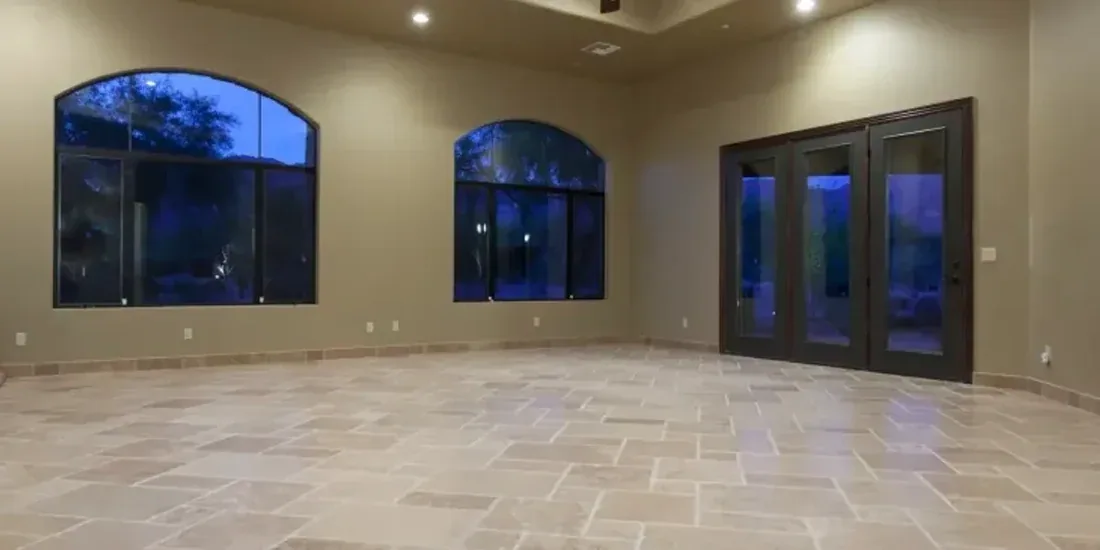
New marble is the most fragile floor in the town
The rebuilds here have gone heavily to polished marble and large-format stone, and it is worth being direct about what that means.
Polished stone shows etching more than any other finish. A polished surface reflects light evenly, so a dull patch is visible immediately and from across a room. The same etch on honed travertine would be barely noticeable.
New also does not mean protected. Stone installed in the last few years may have been sealed once at install or not at all, and a sealer applied three years ago in a busy house has frequently worn through already. The water test settles it in five minutes.
Renovation dust is its own problem
Specific to a neighborhood with this much construction activity, and it is not ordinary soil.
Drywall dust, saw dust and grinding residue from nearby work is abrasive and alkaline, and on a polished stone floor it does two things at once. It scratches the finish underfoot, and it works into any unsealed surface.
If your house has been through a renovation, or one next door has, the floor has taken more than you think. It is also one of the clearest cases for cleaning and sealing afterward rather than living with it.
Forty-year-old travertine on the same street
The contrast is the interesting part of this neighborhood.
Next door to the new marble there is travertine that went down in the eighties, has had several generations of sealer applied to it, and has gone completely flat. Those two floors need almost nothing in common.
The marble wants gentle cleaning, clear seal and an owner who throws out the acidic products. The travertine wants establishing what is already on it, thorough cleaning, and it is one of the best color enhancing candidates there is, because flat travertine is exactly what that sealer was made for.
The chemistry, which is the whole reason this is a separate trade
Travertine, marble and limestone are calcium carbonate. Acid dissolves calcium carbonate. Everything else follows from that one fact.
It means an acidic product does not clean these stones badly, it removes part of the surface, leaving a dull patch where the finish used to be. It happens on contact rather than over time, and there is no route back that does not involve a refinisher and diamond pads.
It also means most of what sits under a kitchen sink is dangerous here. Anything sold for hard water, soap scum or general bathroom use is very likely acidic, and vinegar, which gets recommended constantly, is among the worst.
Everything we put on stone is pH-neutral. There is no circumstance in which that changes.
Worth asking any other company the same question, and treating a vague answer as an answer.
The honest limits
Stone is the one surface where the damage is permanent and expensive, so this belongs near the top rather than in a footnote.
Cleaning and sealing addresses soil, mineral and protection. Cleaning pulls out what has worked into a porous surface, and sealing keeps the next lot from going in. On stone that has never been properly cleaned the difference is substantial.
It does not address etching or worn finish. Etching is where acid has dissolved part of the surface. Worn finish is where traffic has abraded it. Both are changes to the stone itself rather than something sitting on it, so neither cleans off and neither is hidden by sealer.
Putting those right means honing and polishing with diamond pads, which is refinishing. We do not offer it, and when that is what a floor needs we will tell you rather than take the job and leave you disappointed.
How we do it
- Identify the stone and assess the existing sealer. Travertine, marble, limestone and slate each behave differently, and what suits one can harm another. We also establish whether a sealer is present and what state it is in, because that changes the approach entirely.
- Clean with products matched to that stone. pH-neutral throughout, lifting soil and mineral out of the stone and the grout without touching the surface itself.
- Seal, if you have chosen it. Clear to protect what is there, color enhancing to bring the natural color forward, and grout color seal on the lines if you want it.
- Walk the finished floor with you before anything leaves, and explain the cure time for the product used.
Cleaning always precedes sealing. Sealing over soil locks it beneath the coating instead of protecting anything, which is why these are sold as tiers rather than sealing offered alone.
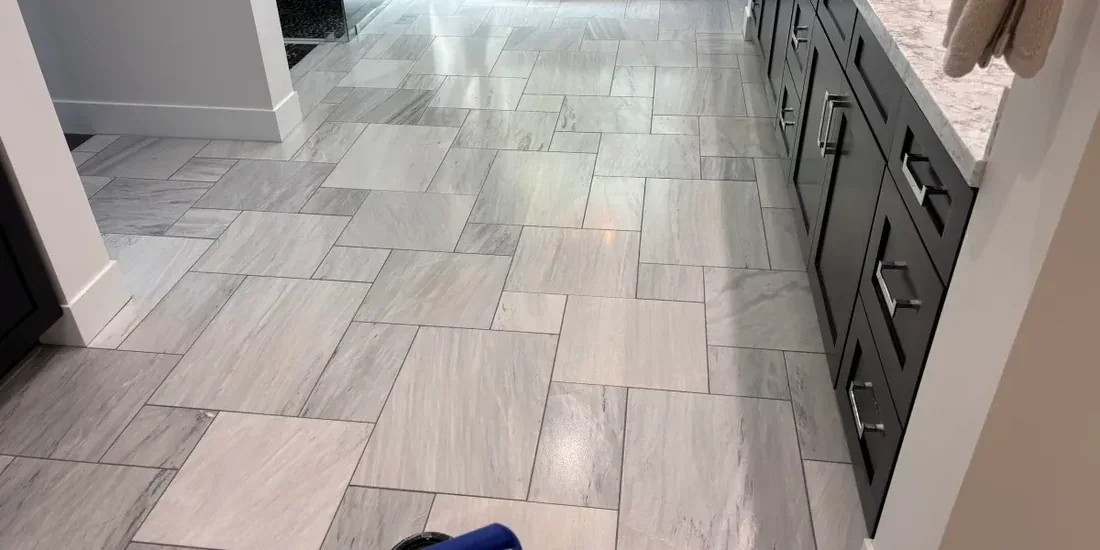
How often to reseal
Reseal every one to two years, depending on the product used and how much traffic the area sees.
There is a test that removes all opinion from it. Put a few drops of water on the stone and leave it five minutes. Beading means the seal is intact. Soaking in and darkening the stone means it has gone, and the stone is now absorbing everything else too.
Most floors we are called to fail that test and the owner had no idea, because a sealer wearing out is invisible until you go looking for it. Full page on resealing.
Questions from Mummy Mountain and Cheney Estates
What does it cost in Mummy Mountain and Cheney Estates?
Interior: cleaning $1.50/sqft or $1.275 after the 15% off, clean plus clear seal $2 or $1.70, clean plus color enhancing $2.50 or $2.125. Grout color seal takes it to $2.75, $3.25 or $3.75 before the discount. Pool decks are $2, $3 or $4 per sqft. Grout repair from $150, not discounted. $150 minimum per visit.
Is there a Paradise Valley premium?
No. These are the same rates we charge in every town we work in, because the work is the same work. What raises a total here is simply having more stone, which most of these houses do, and you can calculate that yourself from the price list.
What products do you use?
pH-neutral and stone-safe, without exception. Acid dissolves marble, travertine and limestone on contact, so there is no circumstance in which an acidic product touches your floor. It is worth asking anybody else you get a quote from the same question.
Can you remove etch marks?
No. Etching is where acid has dissolved part of the stone surface, so there is nothing sitting there to clean off. Removing it means honing and polishing with diamond pads, which is refinishing and a different trade. We will tell you when that is what a floor needs.
How often should stone be resealed?
Every one to two years depending on the product and the traffic. Put a few drops of water on the stone and wait five minutes. Beading means the seal is working. Soaking in and darkening the stone means it has worn through.
Can you work with our house manager?
Yes, including access, timing and invoicing, plus a written note of what was done and anything we found that will not improve.
Elsewhere in Paradise Valley
Camelback Country Estates · Clearwater Hills · Palo Cristi and Sundown Estates · Casa Blanca Estates and Judson · Tatum Canyon and Finisterre
Calls answered 7am to 8pm · same-day service usually available
$1.275/sqft cleaned after the discount. Call or text, 7am to 8pm.